
J Renee Organics Skin and Beauty Blog:
Skin Advice for a Natural, Healthy, Glowing Complexion
Blog Search:
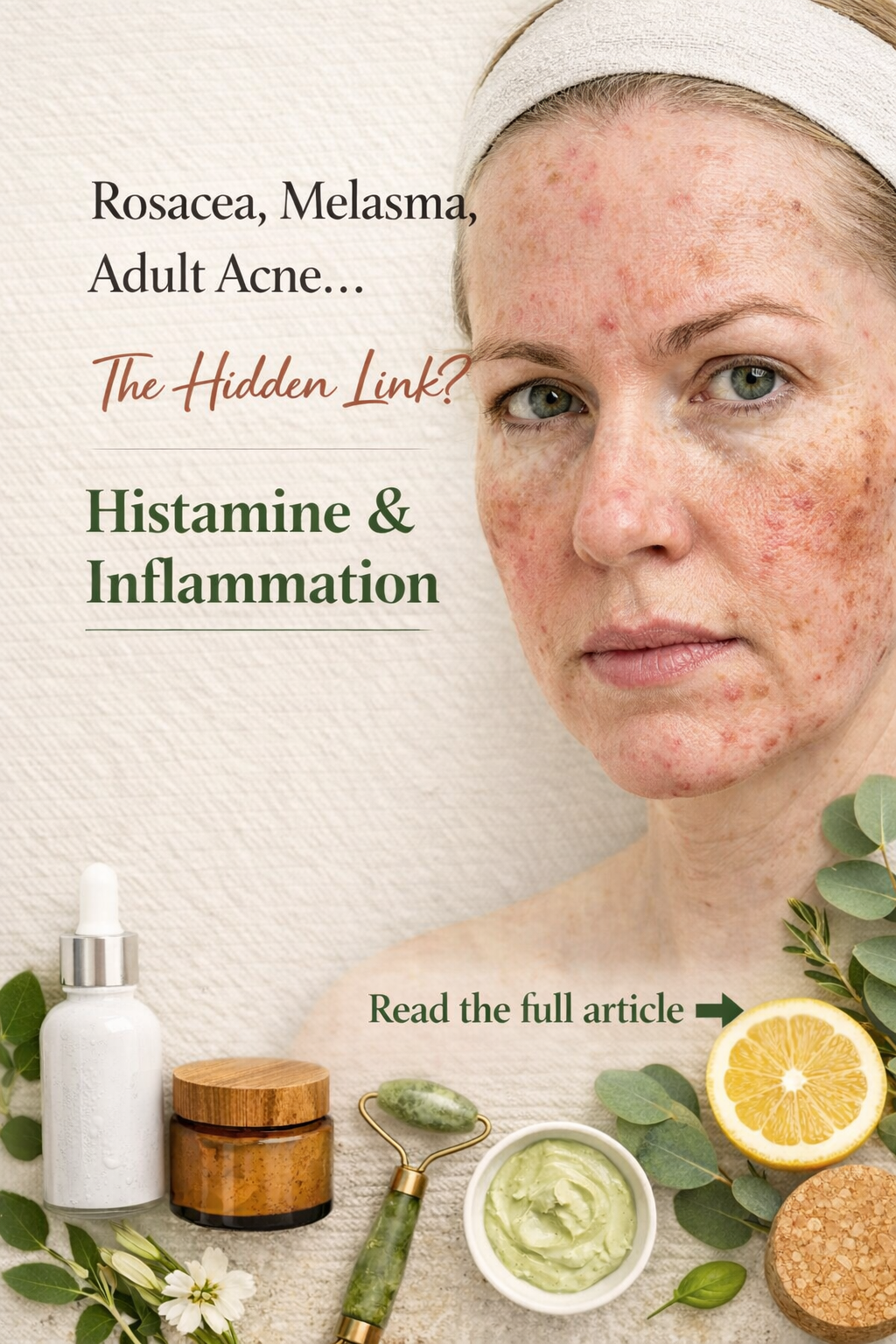
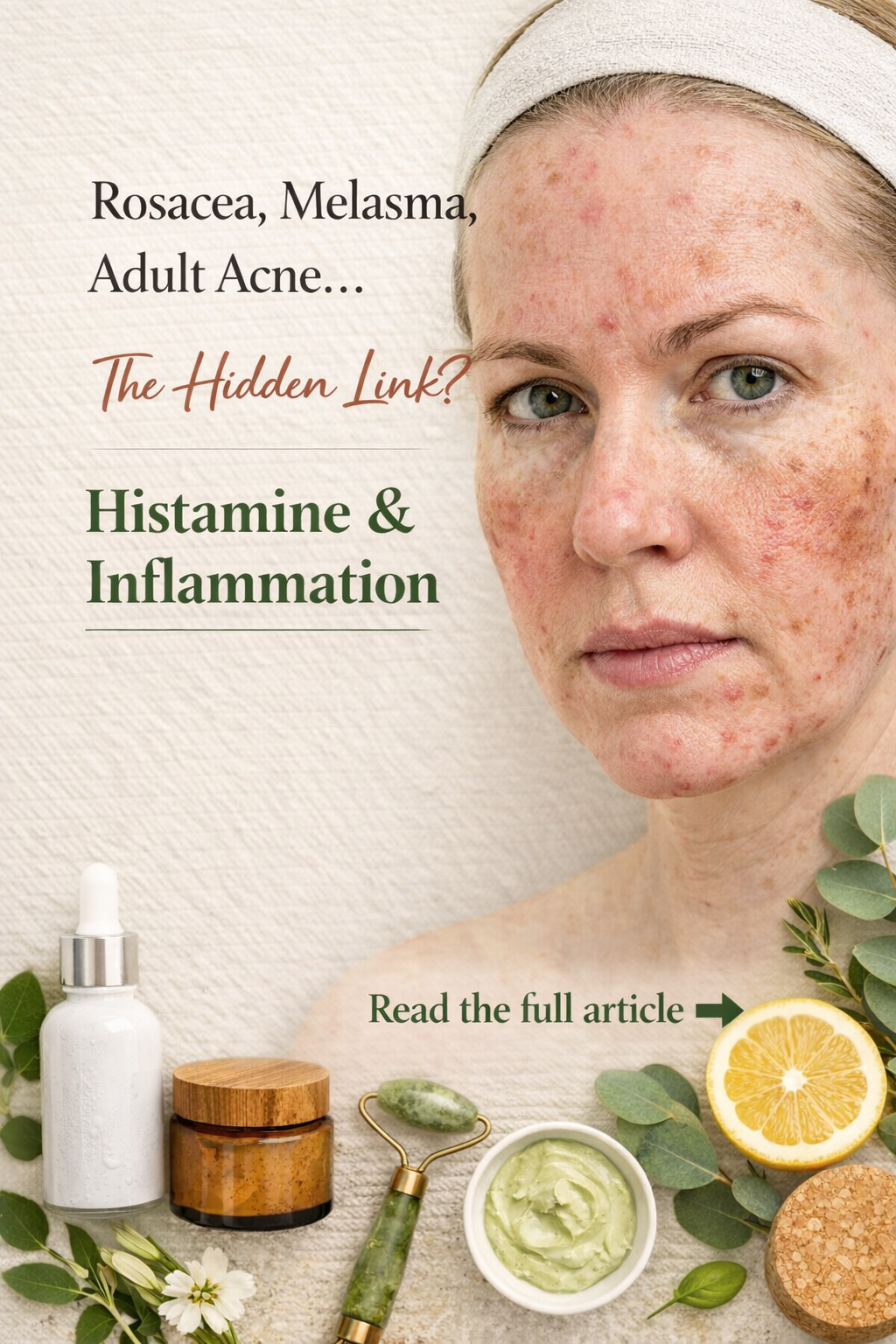
The Hidden Link Between Histamine, Rosacea, Melasma & Adult Acne
✨ You can’t exfoliate inflamed skin into health. You have to calm it.
Rosacea, melasma, and adult acne in Kennesaw, GA are often driven by inflammation and histamine imbalance — not just clogged pores or sun damage. At J Renee Esthetics in Kennesaw, we specialize in gentle organic facials, microdermabrasion, and microneedling designed to calm redness, reduce pigmentation, and support sensitive, reactive skin naturally.
If your skin flushes easily, breaks out along the jawline, or develops stubborn pigmentation that won’t fade — the root issue may not be “bad skin.”
It may be inflammation driven by histamine.
Histamine is a natural immune chemical that expands blood vessels and increases inflammatory signaling. In excess, it can overstimulate the skin — leading to redness, pigment production, oil imbalance, and sensitivity.
How Histamine Affects the Skin
Rosacea:
Histamine triggers flushing and dilates blood vessels. Studies show elevated mast cells (histamine-releasing cells) in rosacea-prone skin, contributing to persistent redness and reactivity.
Melasma:
Inflammation stimulates melanocytes (pigment cells). Research indicates mast cell activity and inflammatory signals increase pigment production — which is why heat and irritation worsen melasma.
Adult Acne:
Histamine increases oil production and inflammatory response. When combined with hormonal shifts and gut stress, it can contribute to cystic, jawline breakouts and reactive skin.
This means you cannot exfoliate or “strip” inflammatory skin into health.
You must calm it.
How to Support Inflammatory Skin
1. Reduce Internal Triggers
Temporarily lowering high-histamine foods (like alcohol, aged foods, and leftovers) while increasing fresh, antioxidant-rich produce can help reduce systemic inflammation.
2. Focus on Gentle, Barrier-Supportive Treatments
Inflamed skin responds best to calming facials, light corrective treatments, and gradual stimulation — not aggressive peels during active flares.
3. Use Antioxidant-Rich, Organic Skincare
Antioxidants help neutralize free radicals, reduce oxidative stress, and calm inflammatory pathways. Clean, intentional formulations support the skin barrier instead of provoking it.