
J Renee Organics Skin and Beauty Blog:
Skin Advice for a Natural, Healthy, Glowing Complexion
Blog Search:
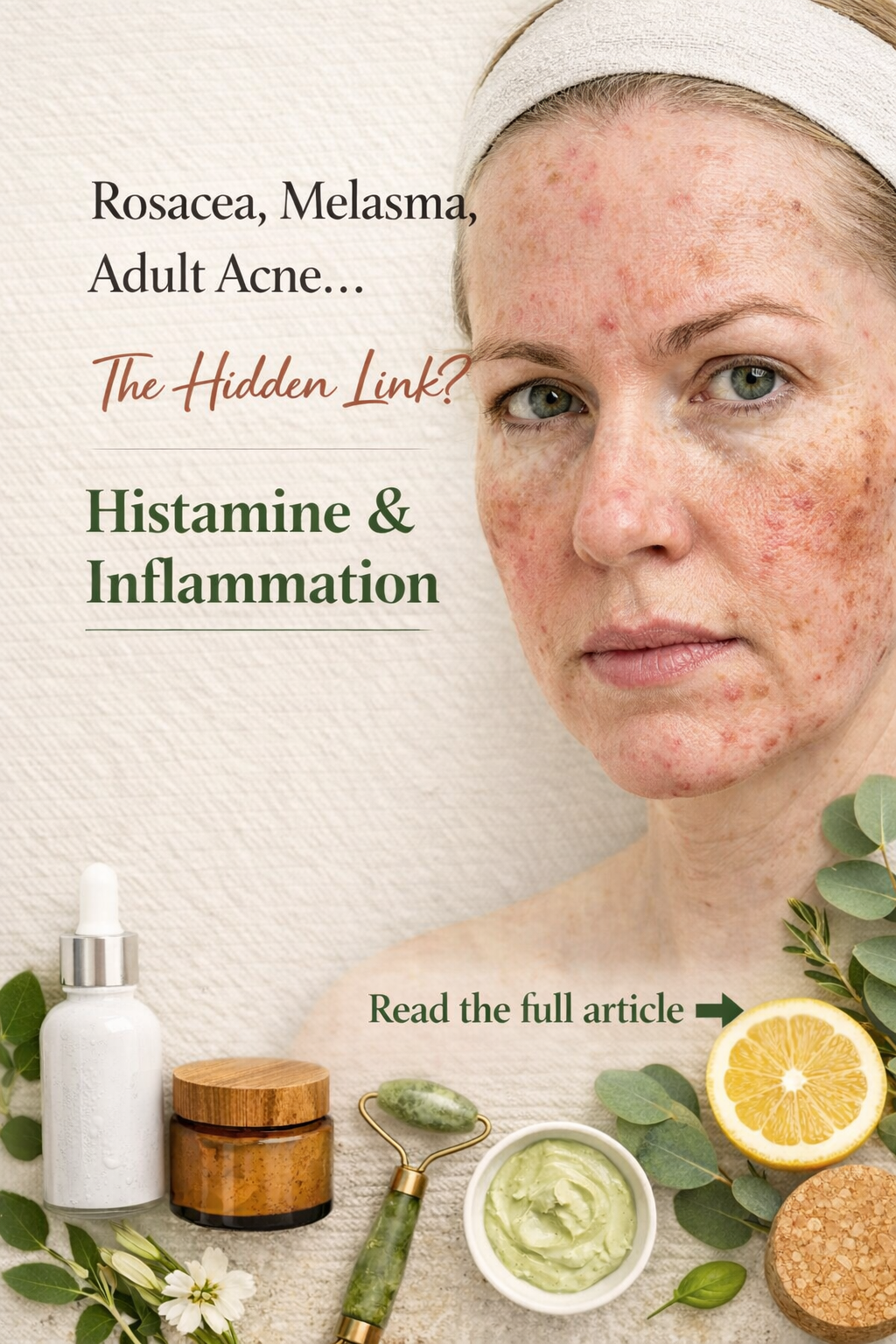
The Hidden Link Between Histamine, Rosacea, Melasma & Adult Acne
✨ You can’t exfoliate inflamed skin into health. You have to calm it.
Rosacea, melasma, and adult acne in Kennesaw, GA are often driven by inflammation and histamine imbalance — not just clogged pores or sun damage. At J Renee Esthetics in Kennesaw, we specialize in gentle organic facials, microdermabrasion, and microneedling designed to calm redness, reduce pigmentation, and support sensitive, reactive skin naturally.
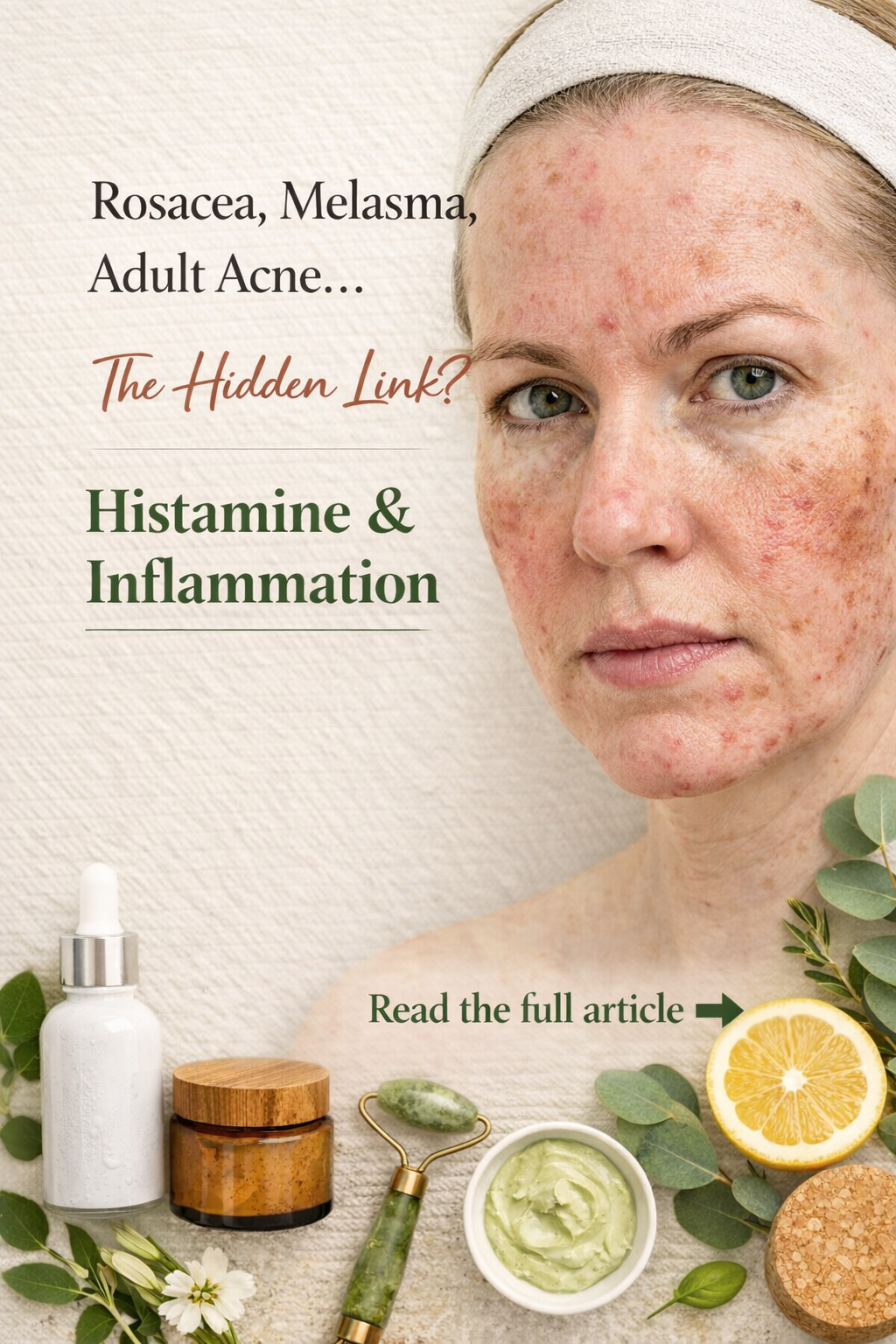
If your skin flushes easily, breaks out along the jawline, or develops stubborn pigmentation that won’t fade — the root issue may not be “bad skin.”
It may be inflammation driven by histamine.
Histamine is a natural immune chemical that expands blood vessels and increases inflammatory signaling. In excess, it can overstimulate the skin — leading to redness, pigment production, oil imbalance, and sensitivity.
How Histamine Affects the Skin
Rosacea:
Histamine triggers flushing and dilates blood vessels. Studies show elevated mast cells (histamine-releasing cells) in rosacea-prone skin, contributing to persistent redness and reactivity.
Melasma:
Inflammation stimulates melanocytes (pigment cells). Research indicates mast cell activity and inflammatory signals increase pigment production — which is why heat and irritation worsen melasma.
Adult Acne:
Histamine increases oil production and inflammatory response. When combined with hormonal shifts and gut stress, it can contribute to cystic, jawline breakouts and reactive skin.
This means you cannot exfoliate or “strip” inflammatory skin into health.
You must calm it.
How to Support Inflammatory Skin
1. Reduce Internal Triggers
Temporarily lowering high-histamine foods (like alcohol, aged foods, and leftovers) while increasing fresh, antioxidant-rich produce can help reduce systemic inflammation.
2. Focus on Gentle, Barrier-Supportive Treatments
Inflamed skin responds best to calming facials, light corrective treatments, and gradual stimulation — not aggressive peels during active flares.
3. Use Antioxidant-Rich, Organic Skincare
Antioxidants help neutralize free radicals, reduce oxidative stress, and calm inflammatory pathways. Clean, intentional formulations support the skin barrier instead of provoking it.
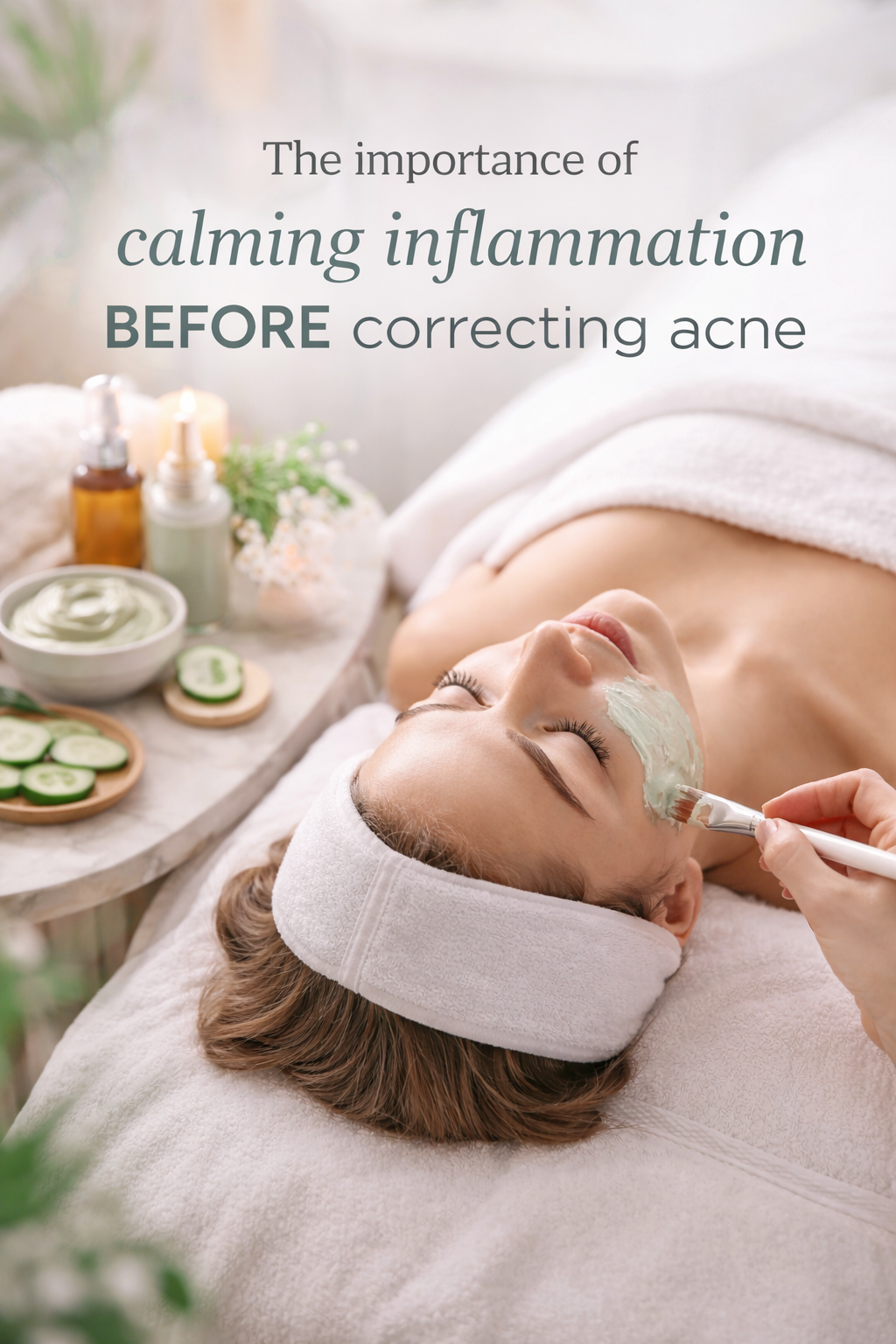
Why Inflammation Must Be Treated First When Correcting Acne
Acne isn’t just a surface issue — it’s an inflammatory condition. Before aggressively exfoliating or extracting, the skin must first be calmed and supported. When inflammation is high, oil production increases, healing slows, and breakouts become more reactive and persistent.
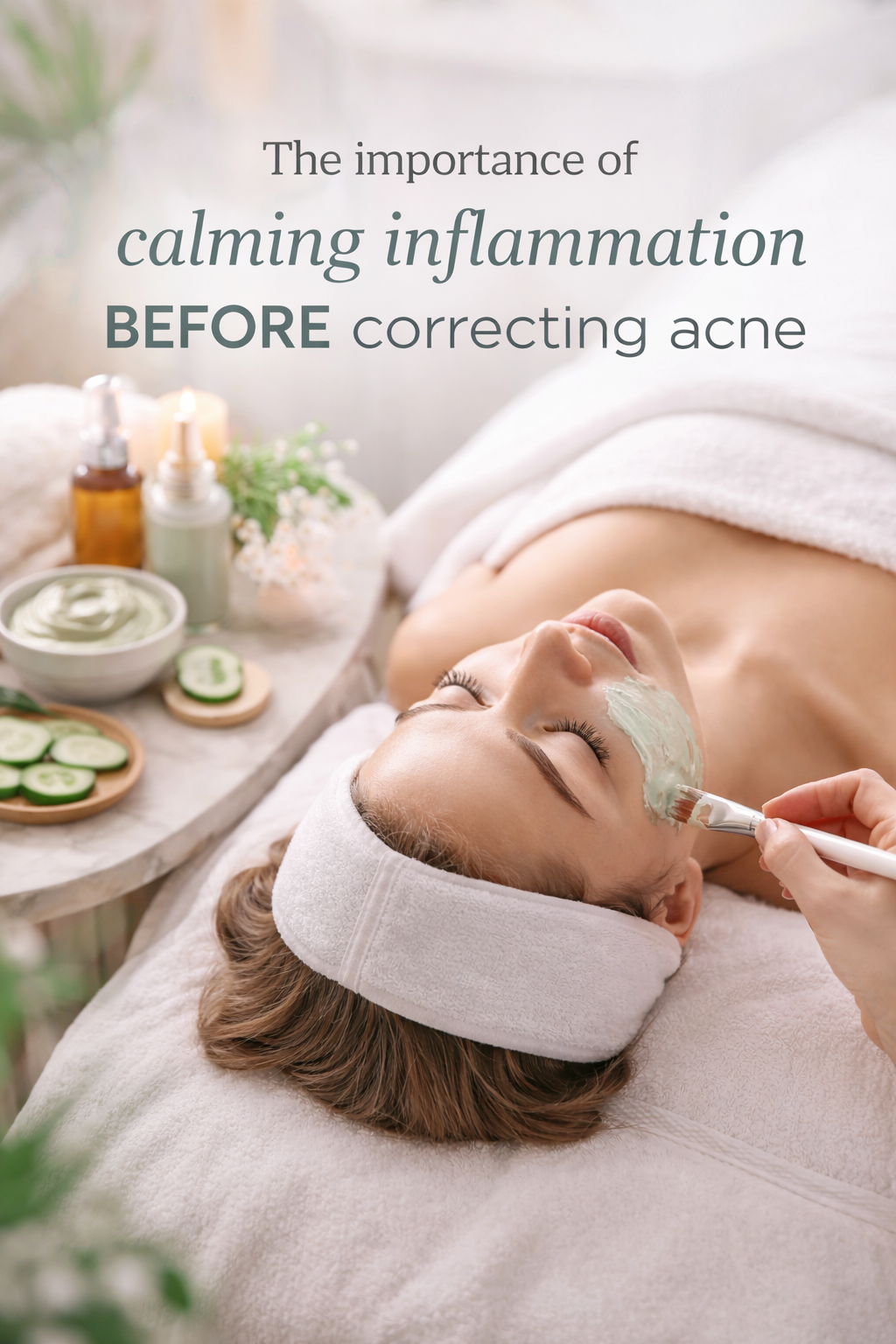
Acne isn’t just clogged pores. It’s inflammation.
Behind every pustule, cyst, and painful breakout is an inflammatory response happening deep within the skin. If we focus only on exfoliating, extracting, or “drying it out,” we often make acne worse — because untreated inflammation keeps the cycle going.
What Inflammation Does to Acne-Prone Skin
When skin is inflamed:
Oil glands become overactive
Pores swell and trap debris
Healing slows down
Post-inflammatory hyperpigmentation (dark marks) lingers longer
The skin barrier weakens, making breakouts more reactive
This is why aggressive treatments can backfire. Over-stripping the skin increases redness, sensitivity, and oil production — creating the perfect environment for more breakouts.
Why We Calm Before Correcting
In the treatment room, inflammation should be addressed before and during acne correction. That means:
✔ Strengthening the skin barrier
✔ Reducing internal and surface inflammation
✔ Using calming botanicals and non-irritating actives
✔ Supporting healing before heavy exfoliation
Once inflammation is controlled, extractions are safer, exfoliation is more effective, and results become more consistent.
The Smart Approach to Acne, J Renee Acne Treatment:
Acne correction works best when we:
Calm the skin
Balance oil production
Support the microbiome
Then strategically exfoliate and resurface
When inflammation decreases, breakouts heal faster, redness fades quicker, and long-term scarring risk drops.
Healthy skin isn’t about attacking acne — it’s about restoring balance. And balance always starts with calming inflammation.