

J Renee Organics Skin and Beauty Blog:
Skin Advice for a Natural, Healthy, Glowing Complexion
Blog Search:
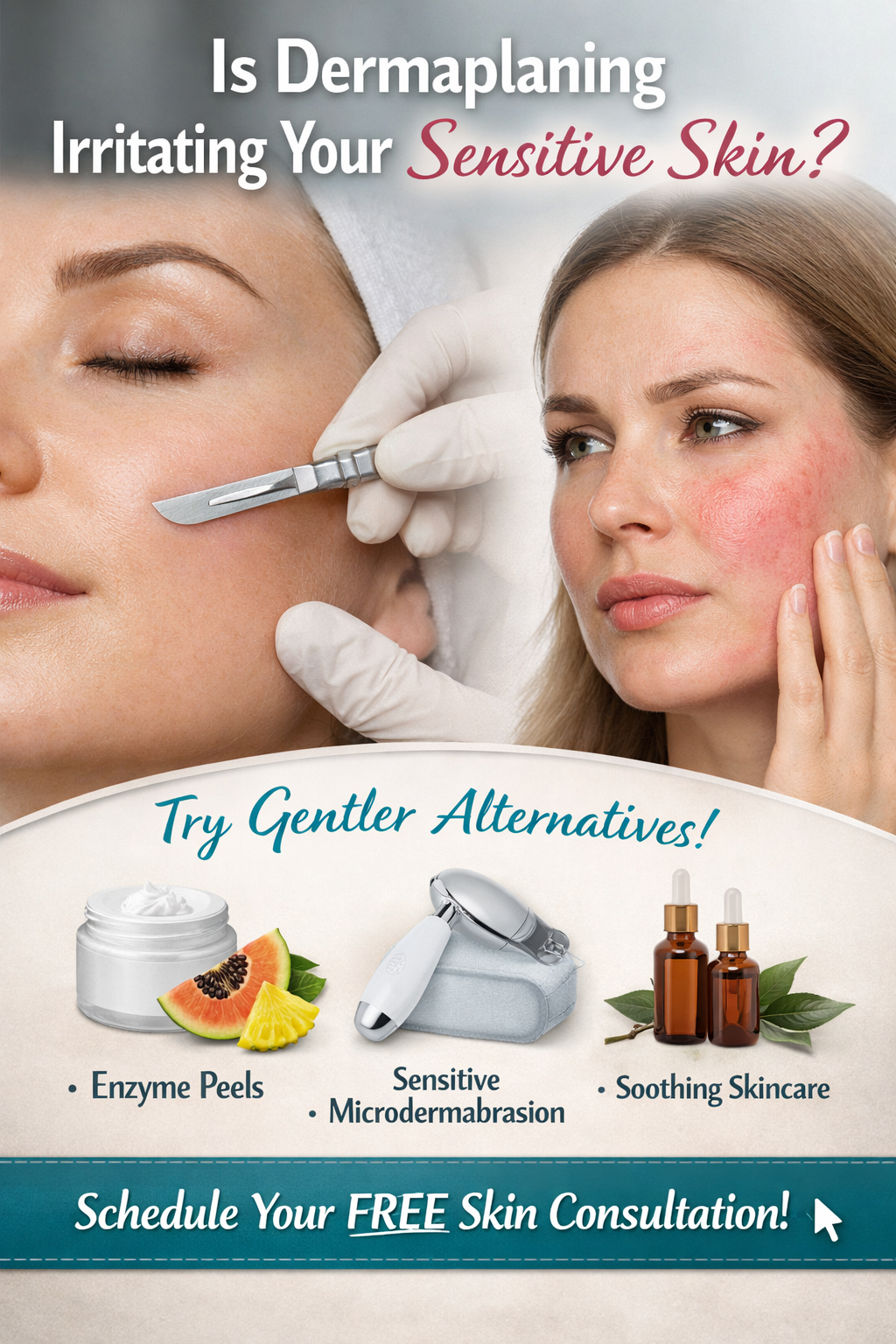
Dermaplaning Isn’t Ideal for Sensitive Skin (And What Works Better)
Dermaplaning can leave skin smooth, but for people with sensitive or reactive skin it may increase redness, irritation, and inflammation. Learn why dermaplaning isn’t always the best choice and discover gentler professional treatments that support a healthy skin barrier.
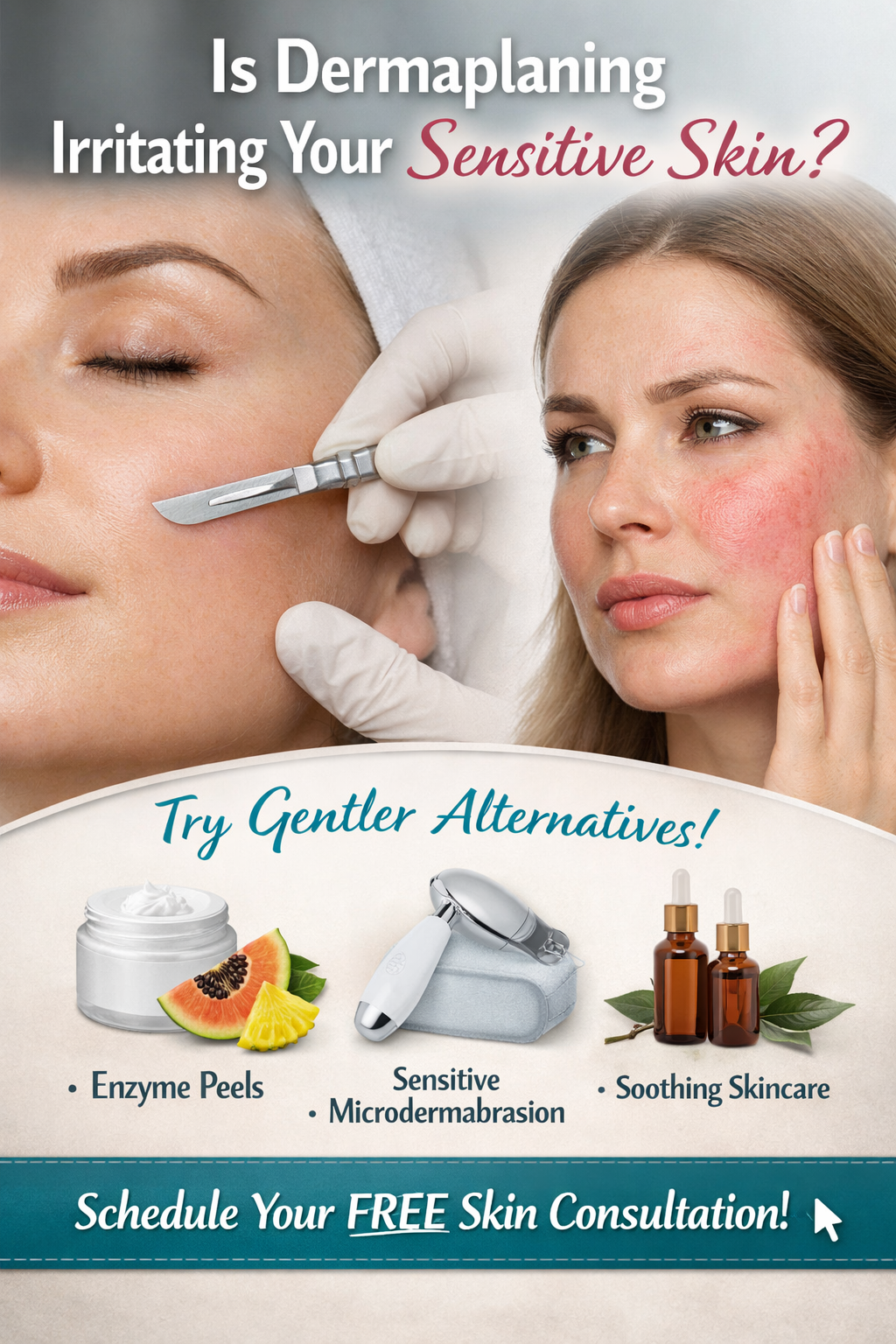
Why Dermaplaning Isn’t Always the Best Choice for Sensitive Skin
Dermaplaning is a popular exfoliation treatment that uses a sterile blade to remove dead skin cells and fine facial hair. While many people love the smooth glow it creates, it isn’t always the right treatment for people with sensitive or reactive skin.
Sensitive skin often has a weakened barrier and a higher tendency toward inflammation. Because dermaplaning is a mechanical exfoliation method, the scraping motion can sometimes trigger redness, irritation, or flare-ups in conditions like Rosacea or Eczema.
Another concern is that dermaplaning temporarily removes part of the skin’s protective outer layer. In resilient skin this can stimulate renewal, but in sensitive skin it can increase water loss and allow irritants to penetrate more easily.
The good news is that sensitive skin can still benefit from professional exfoliation. Gentler treatments such as enzyme resurfacing, microdermabrasion designed for sensitive skin and antioxidant-rich skincare can encourage healthy skin turnover while protecting the barrier.
At J Renee Esthetics, every treatment begins with understanding your unique skin type. Choosing the right exfoliation method can make the difference between irritation and truly glowing skin.
Not sure what treatment is best for your skin?
Schedule a free skin consultation and personalized treatment plan at JReneeOrganics.com and discover the safest way to achieve radiant, healthy skin.

Confused Winter Skin
In colder temperatures we need to adjust our skincare routine to ensure healthy barrier function.

Winter is not your skin’s friend.
In colder temperatures we need to adjust our skincare routine to ensure healthy barrier function. Prolonged exposure to reduced humidity, is a well-known risk factor for AD (Atopic dermatitis). AD increases the natural process of water loss through our skin, which causes dry/itchy skin and signals inflammation (redness). It can also make your body dehydrated and make your lips feel super dry.
To make things worse, as we age, we get dryer as well. Excess dead skin can clog pores and PH levels get less acidic, making skin susceptible to bacterial growth. And this time of year, holiday stress can stimulate oil production. The extra oil produced mingles with the loitering dry skin and you can develop acne.
This situation is not easy to remedy because lotions and creams can be too thick and cause more acne, while acne medications and products are very drying and cause dry skin to persist or get worse. It’s very important to see a professional esthetician, even just for a skin assessment and product suggestions so that you don’t make your skin worse and end up in the dermatologist’s office for medication. Knowing the proper skin care routine for your skin not only saves you time and money, if handled promptly, it can save you weeks or even months of skin issues. Prevention is always easier and cheaper than reversal.
Tips for preventing skin damage in the winter months:
1: Cleanse. Twice a day and after exercising with a gentle, exfoliating cleanser for your skin type.
2: Tone. Balance PH levels after cleansing. Rinsing with just water is the worst option when cleansing, water alters healthy PH levels, leaving your skin dry and prone to irritation.
3: Moisturize. You don’t need a night cream/day cream/eye cream... Shoot for a moisturizer that your skin likes and use it from your chest- up, every day, twice a day. Make sure it’s right for your skin type and current skin health.
4: WEAR SUNSCREEN! UV rays cause inflammation, acne scarring, wrinkles, age spots and cancer. I’m not a fan of 2 in 1 moisturizer with sunscreen, they don’t work well for moisture or for sun protection (think all-in-one printers, something is always on the fritz). Instead, use SPF of at least 30 on your face (over your moisturizer) when you’re going to be outdoors; if only inside the whole day, skip this step.
5: Schedule an exfoliating skincare service like a peel, facial or microdermabrasion. This will remove dead skin and unclog pores, kill bad bacteria that causes acne and allows moisturizer to soak in better, saving you money on products.
Shelly Todd, Esthetician

Atopic Dermatitis