
J Renee Organics Skin and Beauty Blog:
Skin Advice for a Natural, Healthy, Glowing Complexion
Blog Search:
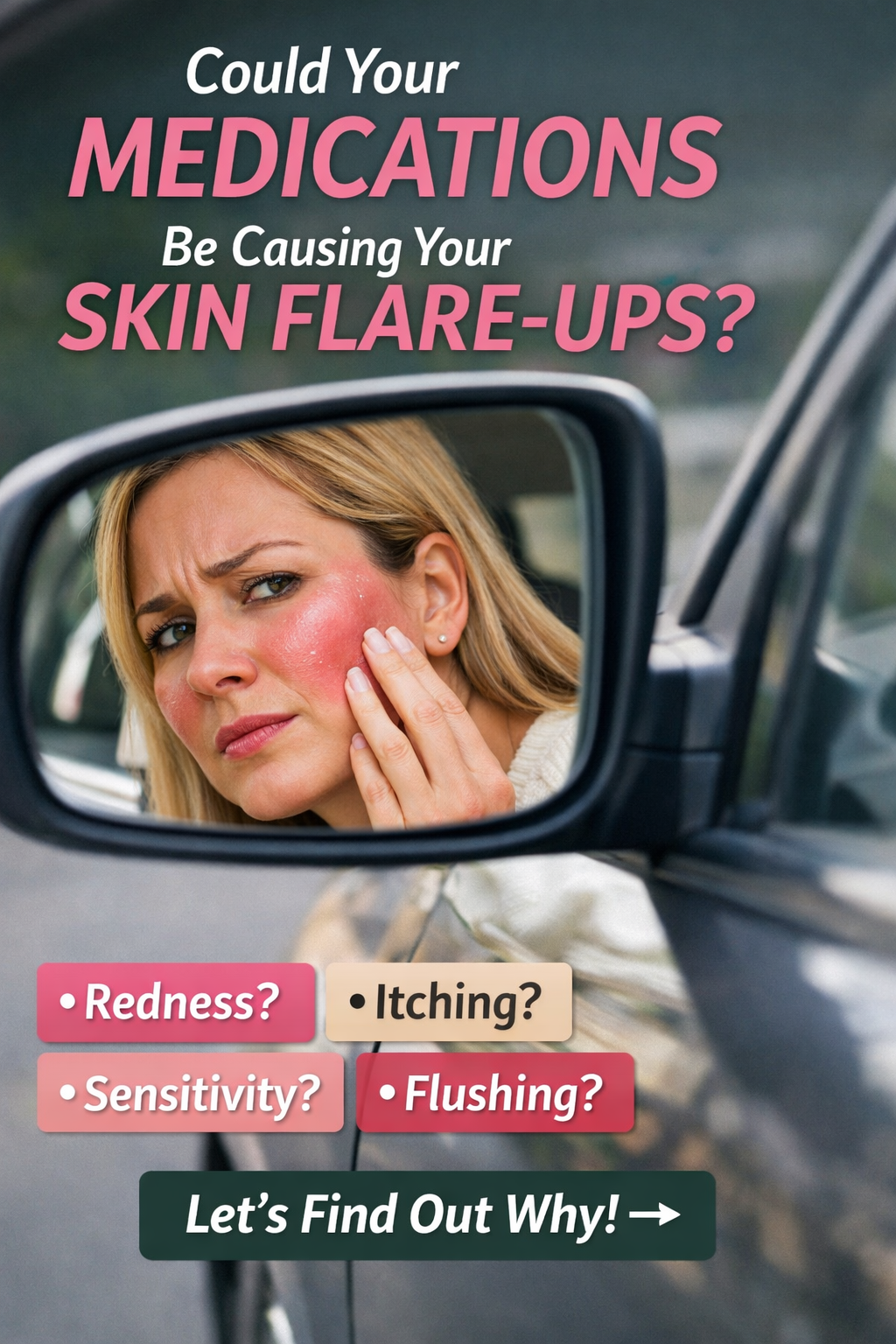
💊 The Hidden Skin Triggers in Your Medicine Cabinet
Struggling with sensitive or reactive skin in Kennesaw? Learn how common OTC medications may be triggering redness, flushing, and irritation—and what you can do to calm your skin with expert help from J Renee Esthetics.
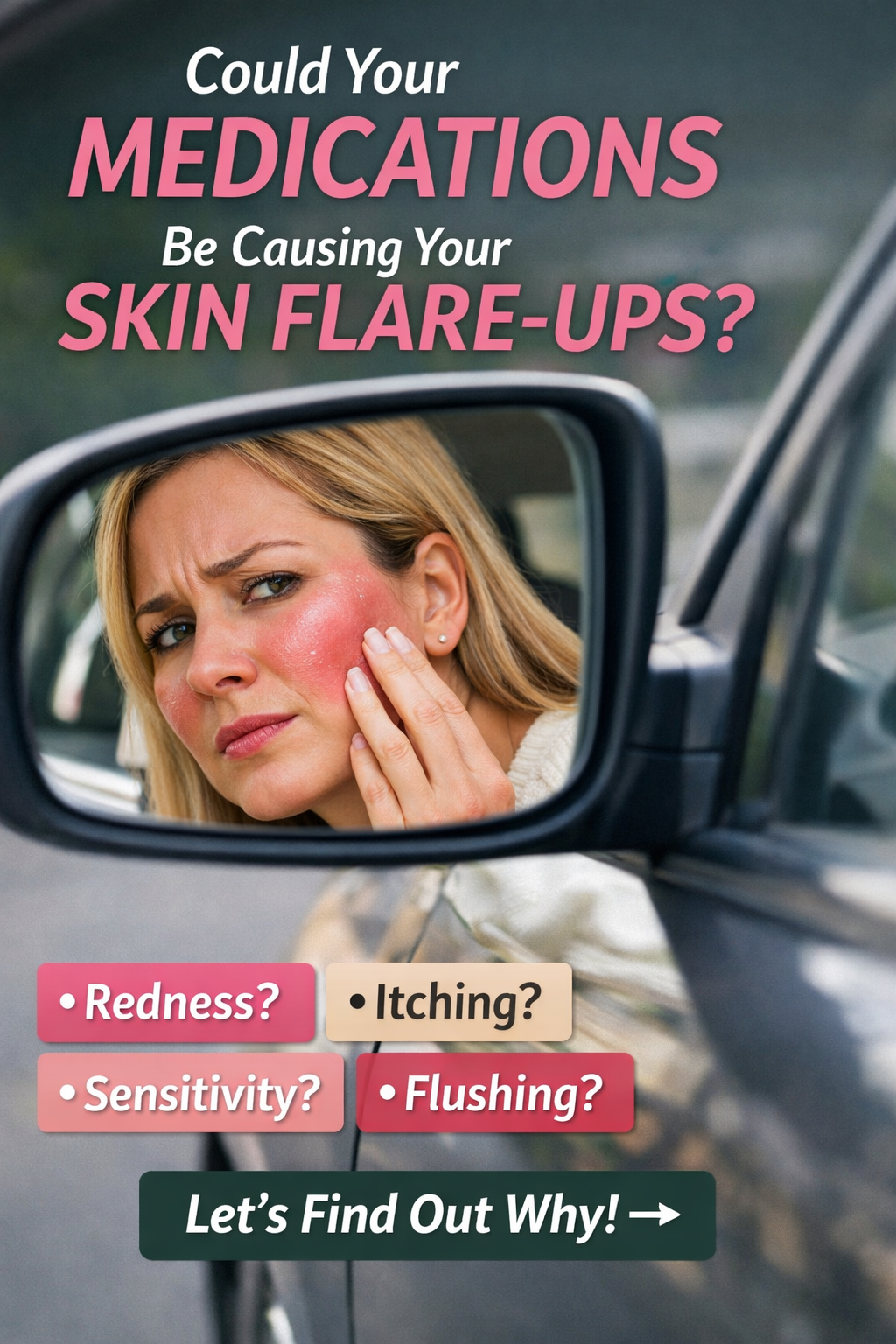
How Common OTC Medications Can Make Skin Reactive (And What You Can Do About It)
If your skin has suddenly become more sensitive, reactive, red or unpredictable—you might be looking at your skincare…
…but the real culprit could be sitting in your medicine cabinet.
Many common over-the-counter (OTC) medications can quietly disrupt your skin barrier, increase inflammation or trigger histamine responses—especially if you already struggle with sensitive skin, rosacea, acne or chronic health issues.
Let’s break down what could be affecting your skin—and exactly what you can do about it.
1. Pain Relievers (NSAIDs)
Common examples:
What they can do to your skin:
Increase histamine release → redness, itching, hives
Trigger flushing (especially in rosacea clients)
Worsen mast cell activation symptoms
✔️ What you can do about it:
Track flares after taking these medications
Use only when necessary (not daily if avoidable)
Support your skin barrier with calming, anti-inflammatory products
Consider discussing alternatives with your doctor if reactions are frequent
2. Cold Medications & Decongestants
Common examples:
What they can do to your skin:
Constrict blood vessels → rebound redness and flushing
Increase dryness and dehydration
Make sensitive skin feel tighter and more reactive
✔️ What you can do about it:
Increase hydration (inside + topical) while using them
Avoid exfoliation or aggressive treatments during use
Focus on barrier-repair skincare (think soothing, nourishing, simple)
Add a humidifier if you’re taking these for several days
3. Antihistamines (The Double-Edged Sword)
Common examples:
What they can do to your skin:
Dry out the skin → compromised barrier
Lead to dull, tight, or flaky skin over time
Sometimes cause paradoxical sensitivity
✔️ What you can do about it:
Use hydrating, lipid-rich skincare (not just water-based)
Avoid over-cleansing and exfoliating
Pair with barrier-repair ingredients (ceramides, fatty acids, occlusives)
Work with your provider on the best antihistamine type for long-term use
4. Acne Treatments (Overuse = Sensitivity)
Common examples:
What they can do to your skin:
Strip the skin barrier
Cause redness, burning, peeling
Turn acne-prone skin into reactive skin
✔️ What you can do about it:
Use less often (not always daily!)
Alternate with barrier-repair days
Avoid layering multiple actives
Get professional guidance instead of guessing
5. Acid Reducers & Gut Medications
Common examples:
What they can do to your skin:
Alter the gut microbiome
Reduce nutrient absorption (like zinc + B12)
Increase inflammation showing up in the skin
✔️ What you can do about it:
Support your gut with a balanced, whole-food diet
Consider discussing nutrient levels with your provider
Incorporate antioxidant-rich skincare to offset inflammation
Focus on long-term skin healing, not quick fixes
The Big Picture: It’s Not Just Your Skincare
If your skin feels reactive, it’s often a combination of:
Barrier damage
Internal inflammation
Histamine response
Nervous system stress
And medications can influence all four.
✨ When to Get Extra Support
If you notice:
Random flushing
Burning or stinging from products you used to tolerate
Acne + sensitivity at the same time
Skin that won’t “calm down” no matter what you use
…it’s time to stop guessing. Text Shelly at J Renee Esthetics for some expert advice or to schedule a consultation or treatment. Call or text 470-522-0906